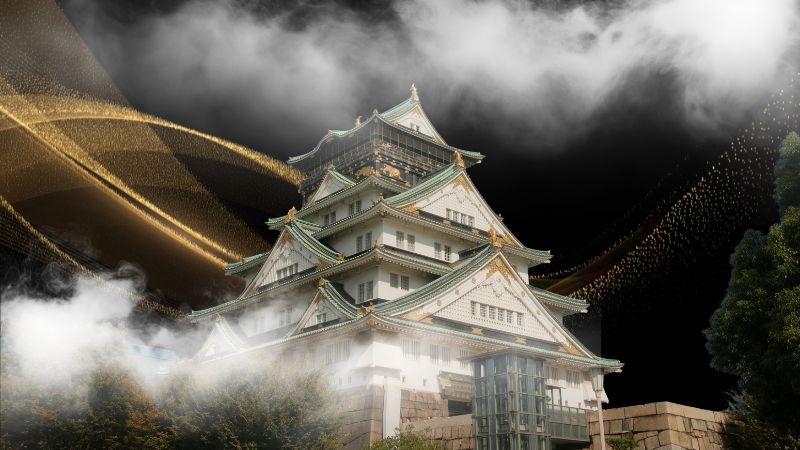
The FX drama series SHOGUN portrays the beautiful yet cruel world of Warring States Japan. After being captivated by its overwhelming visual beauty, do you ever find yourself wondering about the reality behind it?
“What kind of armor did Tokugawa Ieyasu, the model for Yoshii Toranaga, actually wear?”
“Did Anjin really live as a samurai? Where is his grave?”
“How do the tea rooms and Noh stages depicted in the drama differ from the real ones?”
This page selects 10 sites where you can access “primary sources” disseminated by museums, public institutions, and the official production team, rather than uncertain rumors on the internet. These are the compasses for discovering historical truth.
After enjoying the fiction of the drama, let’s embark on a “journey of real history” starting here.
1. Official Information and the Author’s World: The Origin of the Story
First, let’s grasp the official sources that built the world of the drama and the roots of the original novel. Knowing the behind-the-scenes of the production will deepen your viewing experience manifold.
① FX Networks “SHOGUN” Official Site
Above all else, you should check the official site of the US FX network. Here lies not just a mere synopsis, but a vast amount of material to deepen viewer understanding. Of particular note is the “Viewer’s Guide”.
This site releases production secrets told by producers like Hiroyuki Sanada and historical supervisors, as well as making-of videos like “Inside Shogun” that explain the details of costumes and sets. Also, in the official podcast, the writers of each episode discuss in detail “why this scene was included,” making it a treasure trove of information for fans.
What you can find on this site
- Detailed synopses for each episode and official photo galleries
- Behind-the-scenes commentary by the production team and cast (Podcasts/Videos)
- Character correlation charts and a glossary of terms
② James Clavell Official Site
This is the official site of James Clavell, who wrote the novel SHOGUN on which the drama is based. You can learn how his own experience as a prisoner of war during World War II and his deep interest in Asian culture led to the creation of this masterpiece.
It is an indispensable site for understanding the connections across his life’s work, the “Asian Saga,” which includes not only SHOGUN but also works set in Hong Kong like TAI-PAN and NOBLE HOUSE.
What you can find on this site
- Author James Clavell’s biography and POW experience
- Commentary on all works in the “Asian Saga”
- Publication information and legacy of the original novel
2. Tracing the Footsteps of the Ruler Tokugawa Ieyasu (Yoshii Toranaga)
We introduce the highest authority sites that manage the armor actually worn by Tokugawa Ieyasu, the model for Yoshii Toranaga played by Hiroyuki Sanada, and the place where he rests.
③ Kunozan Toshogu
Kunozan Toshogu in Shizuoka City, Shizuoka Prefecture, is where Tokugawa Ieyasu’s body was first buried and is the origin of the “Toshogu” shrines that enshrine Ieyasu as a deity.
On the official site, you can check the architectural beauty of the shrine buildings designated as National Treasures and items related to Ieyasu housed in the museum. Information on the “western clock” said to have been favored by Ieyasu and the armor worn at the Battle of Sekigahara (Important Cultural Property) is a must-see. You can touch upon not only Toranaga’s face as a “tactician” but also the testament (legacy) in which Ieyasu wished for peace in his later years.
What you can find on this site
- Tokugawa Ieyasu’s “Last Will” and the history of his burial
- Explanation of the architectural style of the National Treasure shrine buildings (Gongen-zukuri)
- Ieyasu’s personal items housed in the museum (Western clock, pencils, glasses, etc.)
④ The Tokugawa Art Museum
Located in Nagoya City, Aichi Prefecture, this museum is a rarity in Japan as it inherits the “Daimyo tools” passed down in the Owari Tokugawa family in their original form.
It houses National Treasures such as the Tale of Genji Scrolls, as well as swords, tea utensils, and Noh masks actually used by successive shoguns and daimyo. Just by looking at the collection gallery on this site, you can understand how the tea ceremony scenes performed by Mariko and Buntaro in the drama and the Noh scenes are based on the aesthetics of historical fact. It is truly “the treasure house of the real Toranaga (Ieyasu).”
What you can find on this site
- Public viewing information for the National Treasure Tale of Genji Scrolls
- High-quality images of real Tokugawa family armor and swords
- Commentary on Daimyo culture (Tea ceremony, Noh, Incense ceremony)
⑤ National Archives of Japan
This is a national institution that preserves “official records” in Japanese history. It houses first-class primary sources, such as letters sent by Tokugawa Ieyasu and historical books compiled by the Edo Shogunate.
In the digital archive, it is possible to view documents related to Ieyasu designated as Important Cultural Properties. For “history detective” fans who want to know how the drama’s script references historical materials or where it dramatizes them, there is no better source of information.
What you can find on this site
- Ancient documents containing Tokugawa Ieyasu’s signature and seal (Kaō)
- Digital viewing of official records (public documents) of the Edo Shogunate
- Specialized knowledge on the preservation and restoration of historical materials
3. The Truth of the Blue-Eyed Samurai Miura Anjin (Blackthorne)
Here are the official tourism sites of the local areas where William Adams (Miura Anjin), the model for John Blackthorne played by Cosmo Jarvis, actually lived in Japan and rests.
⑥ Hirado City Official Tourism Site
Hirado City in Nagasaki Prefecture is the place where William Adams spent his later years and ended his life.
The Hirado City tourism site contains detailed information on Adams’ gravesite and the Dutch Trading Post (restored) where he was active. While Blackthorne in the drama is in the midst of turmoil, through the site you can sense the scenery of the quiet final resting place and how the historical Anjin met his end. If you are considering a “pilgrimage,” check here first.
What you can find on this site
- Access and details for the “Grave of Miura Anjin”
- Exhibition contents of the restored Hirado Dutch Trading Post
- Map of the castle town of Hirado where Anjin lived
⑦ Yokosuka City Tourism Information
Yokosuka City in Kanagawa Prefecture is where “Hemi,” the territory given to Adams by Ieyasu (Toranaga), was located.
In “Tsukayama Park” located here, there are graves for Anjin and his Japanese wife (Anjin-zuka), and the “Anjin Festival” is held every year. You can learn deeply from a local perspective about Anjin’s life after being appointed as a hatamoto (direct retainer) and the achievements he left in Japan, which are not depicted in the drama.
What you can find on this site
- Guide to the nationally designated historic site “Grave of Miura Anjin (Anjin-zuka)”
- Event information for the annual “Anjin Festival”
- The historical connection between Yokosuka and Adams
4. Historical Stage and Academic Authority: To Know More Deeply
Museums and research institutions that academically support the drama’s climax, “Sekigahara,” and the lives of people at that time.
⑧ Gifu Sekigahara Battlefield Memorial Museum
Opened in 2020, this is a state-of-the-art experience-based museum specializing in the Battle of Sekigahara.
The “Battle of Sekigahara” holds significant meaning in the drama as well. This site introduces the facility’s attractions, such as the “Ground Vision” where you can overlook the formations and movements of both the Eastern and Western armies, and a theater where you can experience the battlefield through wind and vibration. It is ideal for understanding geographically and militarily the strategy of how Toranaga (Ieyasu) challenged the battle that divided the realm.
What you can find on this site
- Detailed formation maps and progress of the Battle of Sekigahara
- Introduction to battle experience exhibits using the latest technology (VR, etc.)
- Model courses for touring historical sites
⑨ Historiographical Institute, The University of Tokyo
The pinnacle institution for historical material research in Japanese history. It collects, researches, and compiles a vast amount of historical materials from ancient times to the Meiji Restoration.
At first glance, it may seem like a difficult research institution, but its databases and stored materials (such as the Shimazu clan documents) provide evidence for the political maneuvering and diplomatic relations behind the drama. If you want to gain “expert knowledge” rather than just a “blog anyone can write,” referring to the glossary and public materials here will drastically increase the reliability of your knowledge.
What you can find on this site
- Academic term glossary database related to Japanese history
- Images of top-class historical materials including National Treasures
- Latest historical research results and publications
⑩ Edo-Tokyo Museum
*Currently closed for major renovations (scheduled to reopen in fiscal year 2025), but the information on the site is extremely useful.
This museum exhibits how the city of “Edo” built by Tokugawa Ieyasu developed, using huge models and restored buildings. Around the year 1600, the setting of the drama, is exactly the dawn of Edo. Through the site’s collection search and digital archives, you can learn about the lives of people at that time and the grandeur of urban planning. Upon reopening, it will surely become an essential spot for pilgrimages.
What you can find on this site
- Restored models of Edo Castle and Nihonbashi (Photos/Commentary)
- Daily life tools of common people in the Edo period and Ukiyo-e
- (Post-reopening) Exhibition schedule and event information
Summary
The 10 sites introduced this time are all extremely reliable sources of information, close to historical “primary sources.”
The drama SHOGUN, while fiction, stands on such solid historical facts. By visiting these sites and touching upon real history, your drama appreciation should evolve into a deeper, more intellectual experience.
If there is a site that interests you, please bookmark it and keep it handy for your next viewing.
Let’s set off on a journey—starting with Episode 1.
SHOGUN (Episode 1) Explained:
The Worldview, the “Pilgrimage” Setting of Izu-Ajiro, and a Deep-Dive Travel Report